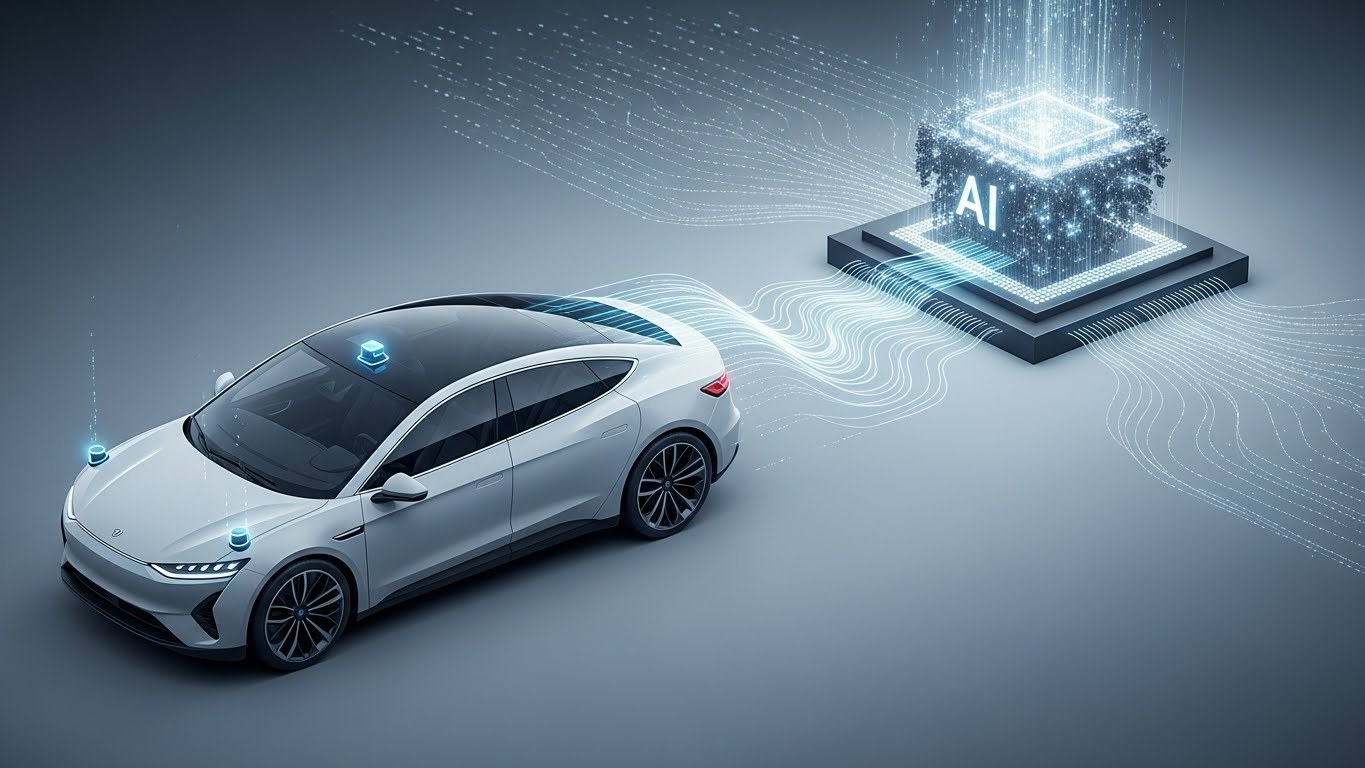
Tesla FSD is no longer an experimental feature.
As autonomous driving technology evolves, Tesla’s Full Self-Driving (FSD) system is increasingly becoming the global reference point for self-driving cars.
Autonomous driving technology has moved far beyond the experimental phase.
Today, Tesla’s Full Self-Driving (FSD) system is widely regarded as a benchmark for real-world autonomous driving.
But as self-driving systems become more common, the industry’s focus is quietly shifting.
The key question is no longer who can make cars drive themselves, but who can make those systems safer, more reliable, and scalable.
This shift explains why NVIDIA is now playing a much larger role in the autonomous driving ecosystem.
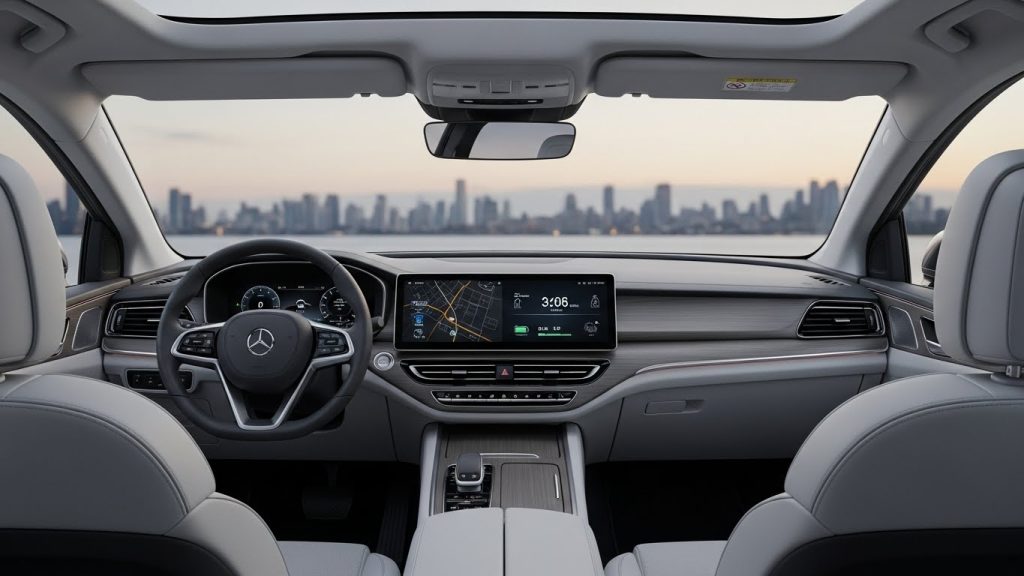
Tesla FSD: How It Became the Industry Benchmark
Tesla FSD stands out because of its unique approach.
Instead of relying on lidar, Tesla uses a camera-based system powered by artificial intelligence and continuous machine learning.
This strategy offers several advantages:
- Lower hardware costs
- Easier global scalability
- Rapid improvement through real-world driving data
As more vehicles operate on public roads, Tesla’s system continuously learns from diverse driving environments.
That feedback loop is what has positioned FSD as a reference point for autonomous driving technology.
The Remaining Challenge: Stability and Safety at Scale
Despite its strengths, no autonomous driving system is flawless.
Real-world driving presents challenges that are difficult to predict:
- Unexpected road conditions
- Construction zones
- Unusual pedestrian behavior
- Complex urban intersections
As vehicles move closer to full autonomy, milliseconds matter.
Decision-making speed, computational reliability, and system-level safety become critical.
This is where the industry’s center of gravity begins to change.
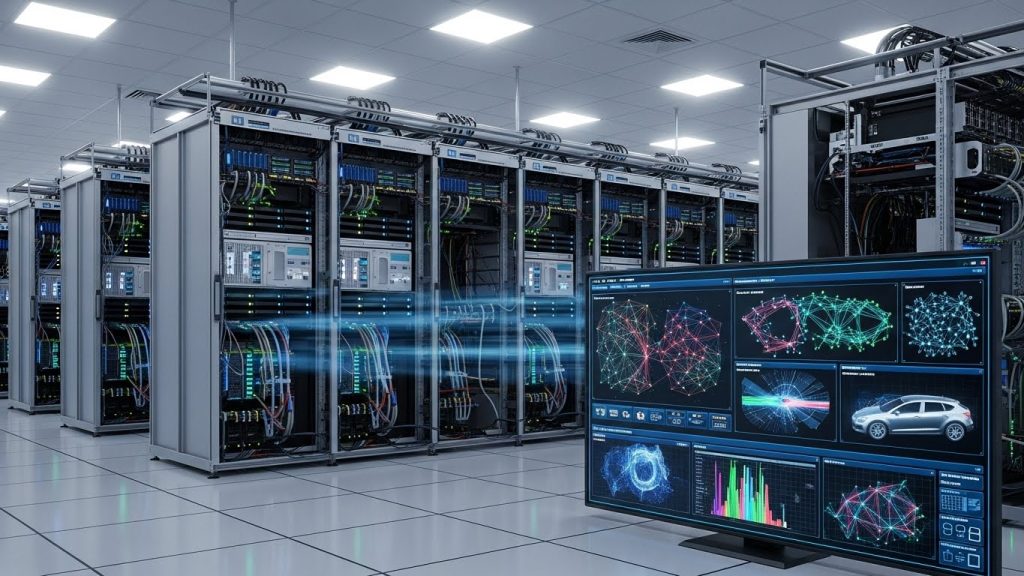
NVIDIA’s Strategic Entry into Autonomous Driving
NVIDIA’s focus is not on teaching cars how to drive.
Instead, the company concentrates on what happens behind the driving decisions.
Its strengths lie in:
- High-performance AI computing
- Real-time data processing
- System redundancy and fault tolerance
- Secure and stable computing architectures
Autonomous vehicles generate massive volumes of data every second.
Processing that data reliably—and without failure—is essential for safety.
NVIDIA’s platforms are designed to serve as the computational backbone of autonomous systems.
Competition or Complementary Roles?
At first glance, Tesla and NVIDIA may appear to be competitors.
In reality, their roles are increasingly complementary.
- Tesla provides real-world driving experience and behavioral data
- NVIDIA supplies the computing power and system stability
As autonomous driving matures, these roles naturally separate.
Automakers focus on vehicle behavior and user experience, while AI and semiconductor companies ensure reliable computation.
This division mirrors trends seen in other technology sectors, where software and hardware ecosystems evolve independently but remain tightly integrated.
How the Autonomous Driving Industry Is Changing
The metrics for success in autonomous driving are evolving.
Previously, progress was measured by how well a vehicle could navigate without human input.
Today, the focus is shifting toward:
- Reducing system errors
- Improving reliability in edge cases
- Ensuring consistent performance across diverse environments
In this context, AI computing platforms are becoming just as important as vehicle design.
Final Thoughts
Tesla FSD established a practical standard for autonomous driving.
NVIDIA’s growing role reflects the next phase of the industry—where safety, stability, and computational intelligence define success.
The future of autonomous driving will likely be shaped not by a single company, but by the collaboration between automakers and AI technology providers.
🔑 Why This Article Works for AdSense
- Neutral, informational tone
- No political or sensational language
- High advertiser relevance (AI, technology, automotive, semiconductors)
- Long-term search potential beyond short-term news cycles
As autonomous driving continues to evolve, the competition will no longer be about who arrives first, but who delivers the safest and most reliable system.
In this transition, Tesla FSD represents the foundation, while companies like NVIDIA are positioning themselves as the backbone of the autonomous driving era.