
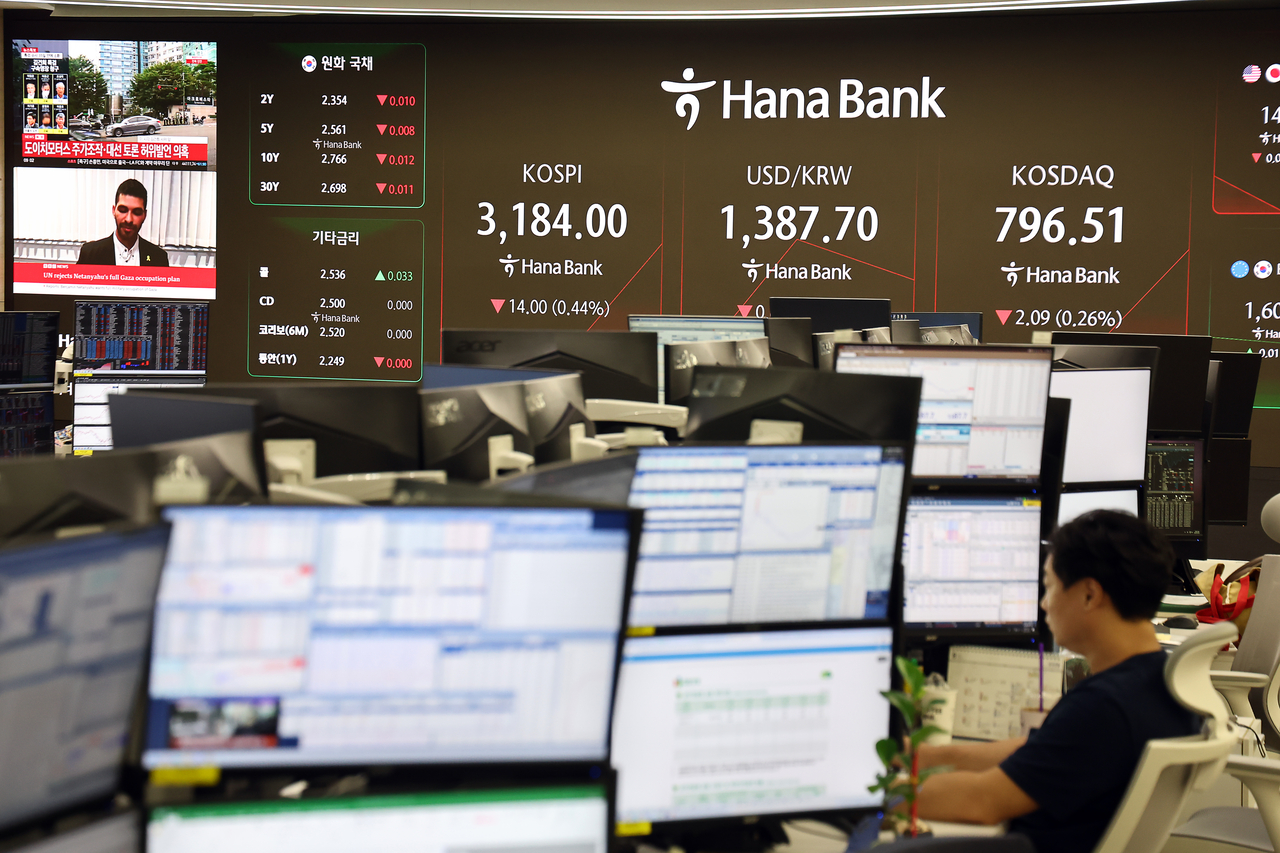
Korea’s Stock Market Has Recovered 4,200 — And the Mood Feels Different
The Korean stock market has recently recovered the 4,200 level on the KOSPI,
and from my perspective as an investor, the overall market mood feels noticeably different.
Not long ago, most discussions focused on whether the rebound would fade quickly.
Now, conversations have shifted toward a different question:
How far can this rally actually go?
That change in sentiment alone says a lot about where the market stands today.

Why the KOSPI’s Move Above 4,200 Matters
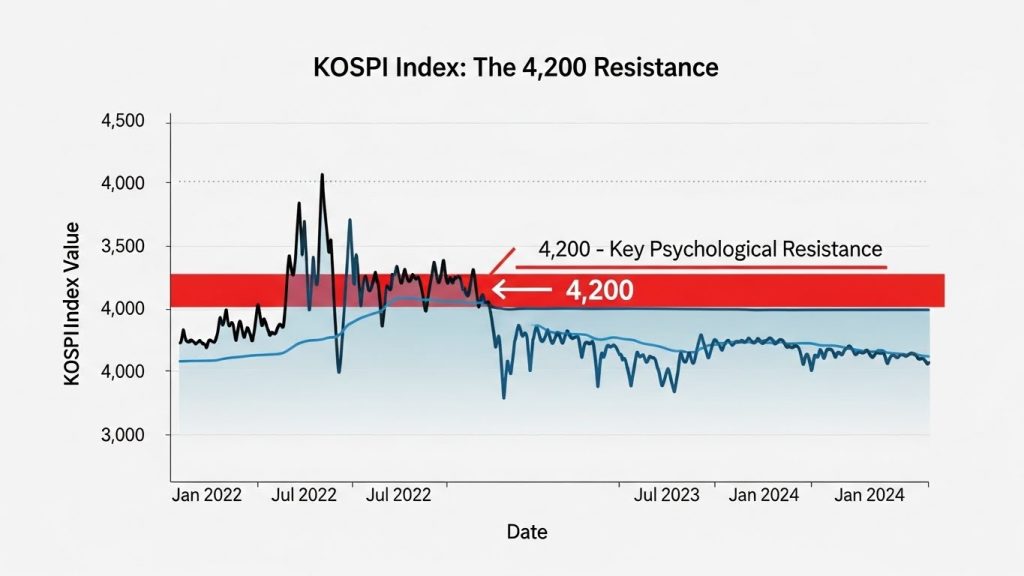
The 4,200 level is not just another number on a chart.
Historically, it has acted as a psychological resistance zone,
where previous rallies often struggled to hold.
This time, however, the index has managed to reclaim that level,
suggesting that investors are beginning to price in
the possibility of further upside rather than treating the move as a short-term bounce.
What Is Driving the Current KOSPI Recovery?
Several factors appear to be supporting the recent strength in Korea’s stock market:
- Improved global risk sentiment
- Renewed expectations around interest rate cuts
- Stabilizing foreign investor flows
- Strength in key sectors such as semiconductors
Taken together, these elements have helped the KOSPI regain momentum after a cautious period.

How High Could the KOSPI Go From Here?
Market expectations generally fall into three broad scenarios.
In the near term, the KOSPI could:
- Consolidate between 4,200 and 4,300 as investors wait for clearer signals
If global conditions remain supportive:
- A test of higher levels, such as the mid-4,000 range, becomes more realistic
On the other hand:
- External risks like currency volatility or geopolitical tension could still trigger short-term pullbacks
At this stage, the market appears to be balancing optimism with caution.
Sector Performance Matters More Than the Index
One important lesson from past market cycles is that a rising index does not benefit all stocks equally.
During the current recovery, performance gaps between sectors have become more visible.
Export-oriented industries, including technology and semiconductors, have shown relatively stronger momentum, while more defensive sectors have lagged behind.
This divergence highlights why index-level optimism should be balanced with sector-level analysis.
Even if the KOSPI continues to trend higher, selectivity is likely to matter more than broad exposure.
What Investors Should Watch Closely
Even during a rising market, not all stocks move together.
Key points worth monitoring include:
- Changes in foreign investor positioning
- Currency movements
- Whether earnings growth continues to support higher valuations
A rising index does not automatically mean lower risk across the board.
Final Thoughts
The KOSPI’s recovery above 4,200 marks an important shift in market psychology.
Rather than signaling a clear peak or bottom,
this move suggests that the Korean stock market has entered
a phase where direction, not just recovery, is being debated.
For now, staying attentive to broader signals may matter more than making rushed conclusions.
The Role of Foreign Investors in the 4,200 Recovery
Foreign investor behavior has been one of the most closely watched indicators during this recovery phase.
While domestic investors often react quickly to short-term volatility, foreign capital tends to move based on broader macroeconomic signals such as currency trends, global liquidity, and relative valuations.
As the KOSPI approached and reclaimed the 4,200 level, foreign flows appeared more stable compared to previous rallies.
This does not guarantee sustained inflows, but it does suggest that the move was not driven solely by speculative momentum.
Monitoring foreign investor positioning remains one of the key factors in assessing how durable this recovery may be.
Disclosure
This article is based on publicly available market data related to the Korean stock market.
Market interpretation and outlook reflect personal observations and analysis.